

Visual impairment affects millions of people worldwide in many different ways.
Understanding the different types of visual impairment and learning respectful ways to help can make a meaningful difference in someone's daily life.
Low Vision
Visual impairment exists on a spectrum, ranging from mild vision loss to complete blindness. Low vision refers to significant visual impairment that cannot be fully corrected with glasses, contact lenses, medication, or surgery. People with low vision may have difficulty reading, recognizing faces, or navigating spaces, but retain some usable sight.
Central and Peripheral Vision Loss
Central vision loss, often caused by conditions like macular degeneration, affects the center of the visual field. People with this condition may struggle to read or see fine details but can often navigate using their peripheral vision. Conversely, peripheral vision loss, common in conditions like glaucoma or retinitis pigmentosa, creates tunnel vision where only the central field remains clear.
Blurred and Distorted Vision
Blurred vision can result from various conditions including uncorrected refractive errors, cataracts, or diabetic retinopathy. Some individuals experience clouded or hazy vision, while others may have blind spots or distorted vision that makes straight lines appear wavy.
Total Blindness
Total blindness, where no light perception exists, represents a small percentage of visual impairment cases. Many people classified as legally blind actually have some remaining vision they can utilize.
How to Provide Helpful Assistance
- Always Ask First: The golden rule when assisting someone with visual impairment is simple: always ask first. Never assume someone needs help or grab their arm without permission. A simple "Would you like assistance?" respects their autonomy and expertise in navigating their own needs.
- Offering Guidance: When offering your arm for guidance, allow them to take your elbow or shoulder rather than pushing or pulling them. Walk slightly ahead and describe upcoming obstacles, such as "Steps going down in three paces" or "Doorway ahead on the right." Be specific rather than using vague terms like "over there."
- Communication Tips: In conversation, don't hesitate to use common phrases like "see you later" or "nice to see you." These expressions are part of everyday language, and avoiding them can feel more awkward than natural. Do speak directly to the person rather than addressing their companion, and identify yourself when approaching, especially in group settings.
- Giving Clear Directions: When giving directions, be precise. Instead of saying "the office is that way," try "the office is about twenty feet ahead on your left, past the water cooler." Avoid rearranging furniture or objects without informing someone who is visually impaired, as they rely on spatial memory and consistency.
- Practical Considerations: If you're guiding someone to a seat, place their hand on the back or arm of the chair and let them seat themselves. When leaving a conversation, always announce your departure so they're not left speaking to an empty room.
Remember that service animals are working and should never be petted, fed, or distracted without the handler's explicit permission. These animals require focus to perform their critical tasks safely.
A Little Assistance Can Go a Long Way
By understanding visual impairment and offering thoughtful, respectful assistance, we create more inclusive communities where everyone can navigate the world with dignity and independence.
Bring us any questions you have about visual impairment!
The content on this blog is not intended to be a substitute for professional medical advice, diagnosis, or treatment. Always seek the advice of qualified health providers with questions you may have regarding medical conditions.
Testimonials
What Our Clients Say

My annual eye exam is always an excellent experience with Dr. Danielle Dyke. The exam is always thorough, and Dr. Dyke takes the time to explain my eye health in a way I can understand. The Vision Source eye clinic is modern, clean, and the staff is very welcoming. I always feel comfortable and well-cared for at my appointment. I highly recommend Dr. Dyke and Vision Source!
Patricia G.
Dr. Schauer did an amazing job getting my eye infection cleared up. As I sat in my room waiting my turn, because I had a last minute appointment, I could hear her working with a family next door that had young kids.
Fred S.
Whenever I have had eye issues, they have made efforts to get me in asap. Which I really appreciate. I have had Dr. Aberle and Dr. Dyke and they are both excellent. Recently, I saw Dr. Aberle for a chronic eye problem in one eye & he fixed the problem. Honestly, it felt like a miracle. The office staff is also very pleasant to deal with.
Sheila S.
I've literally been a lifelong customer since 5th grade when it was Dr. Little! Dr. Schauer has taken over since Dr. Little retired. It's always a good, friendly experience with all of the staff there. I've never had a bad experience.
Bill S.
The front desk people are very nice and friendly got called in to see Wayne before my appointment time Vision Source has very friendly staff and the clinic is very clean will always be a patient to Vision Source.
Deborah C.
I was greeted by the front desk very efficiently. The person who did the first part of my history and did the testing like the little spritz in my eyes, etc, was very good. I really like my eye doctor, I feel that I get all my questions answered as well as she explains what she is seeing when she is examining my eyes.
Dolly A.

Need to Schedule an Appointment?
WE ARE Accepting New Patients
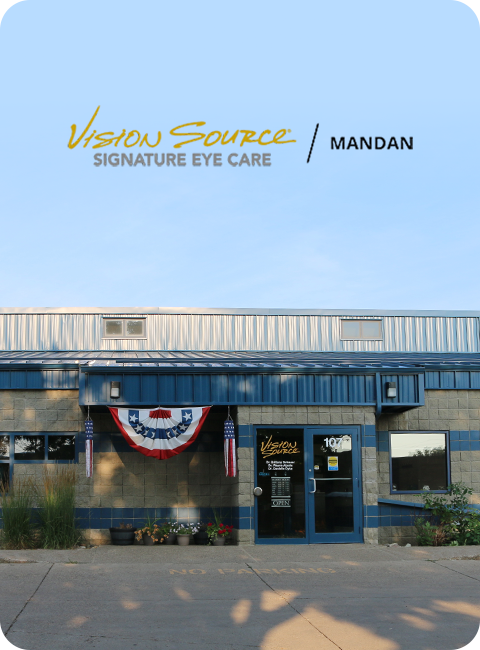
Your vision is precious—trust it to the experienced team at Vision Source Mandan, where we treat you like family
while providing the highest standard of eye care available in the Bismarck-Mandan area.
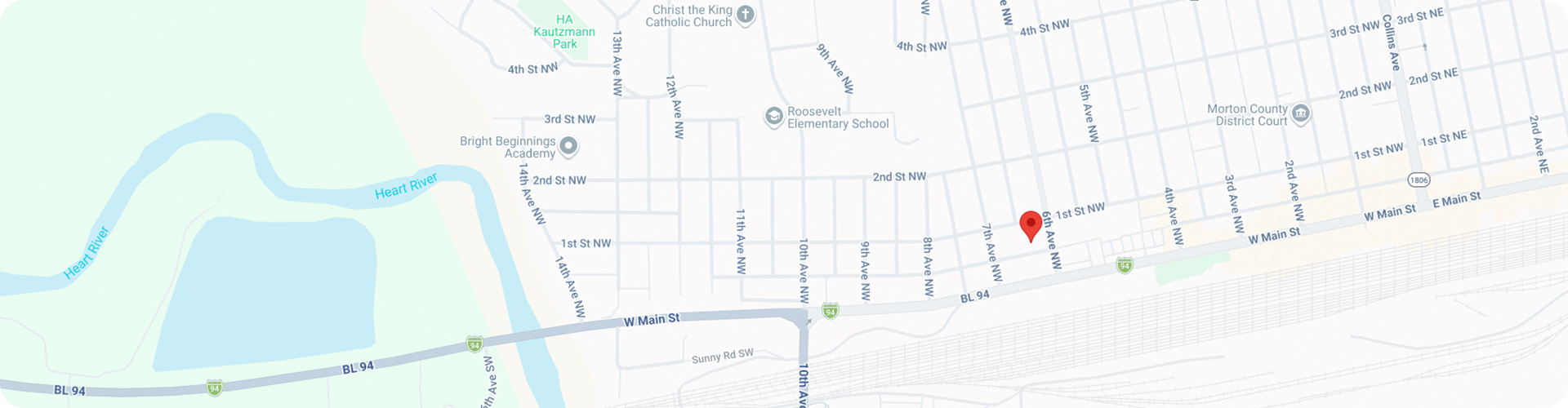
MAP

Contact Us
Office Hours
Monday 8:00am - 5:00pm
Tuesday 8:00am - 7:00pm
Wednesday 8:00am - 5:00pm
Thursday 8:00am - 5:00pm
Friday 8:00am - 1:00pm
Saturday Closed
Sunday Closed
* We are closed from 12:00 pm - 1:00pm on the 2nd Thursday of each month for a team meeting.
© 2026 Vision Source Mandan. All Rights Reserved. Accessibility Statement - Privacy Policy - Sitemap
Powered by: 