
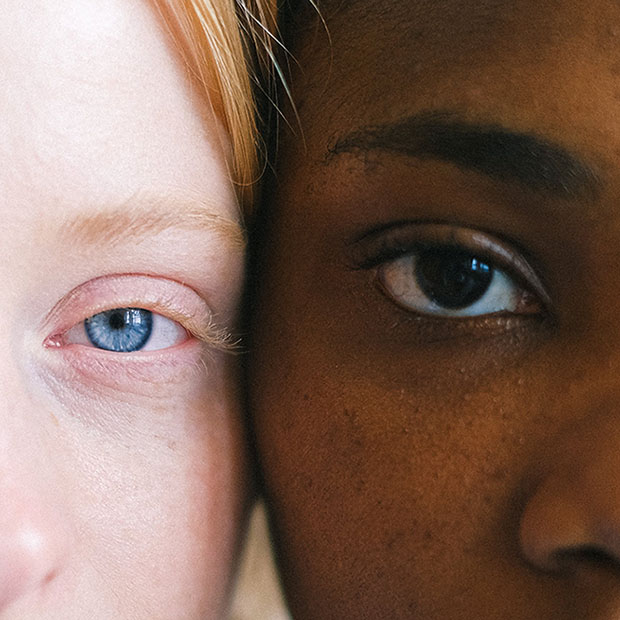
The same compound that determines our skin color also creates the variety of eye colors we see.
In fact, it’s the very same compound that protects our skin and eyes from getting damaged by the sun (though we still need sunglasses and sunscreen to finish the job). So how can one compound (melanin) result in so many different eye colors?
Which Are the Rarest Eye Colors?
Living in an English-speaking country, you might get the impression that there’s a pretty even mix of blue, hazel, and brown eyes in the population. However, across the rest of the planet, the ratios change wildly. The many shades of brown eyes are the overwhelming majority, while scientists are confident that they can trace blue eyes back to the same common ancestor with a specific mutation affecting eye color. Here are the overall percentages:
Brown eyes: 70-79%
Blue eyes: 8-10%
Hazel eyes: 5%
Gray eyes: 3%
Green eyes: 2%
Heterochromia (meaning the two eyes are different colors or there’s a patch of a different color in one eye): 1%
Red or violet eyes: under 1%
How Melanin and Pigment Works in the Eyes
There are two different kinds of melanin in the iris. Eumelanin produces a deep, chocolate brown color, while pheomelanin produces more of the amber, green, and hazel colors. Blue eyes happen when there’s little to no melanin present, rather than due to actual blue pigment. Similar to the way the sky and ocean appear blue, blue eyes get their color from the way light scatters around the iris.
The way eyes can be green is when there’s not quite enough melanin to disrupt the Tyndall effect that creates blue color, so it combines with a yellowish pigment to produce green. Hazel eyes have enough melanin to get past that point. At the opposite end of the spectrum, red or “violet” eyes typical of albinism come from a complete absence of melanin in all layers of the iris, to the point that the Tyndall effect mixes with the red of the underlying blood vessels.
Eye Color Genetics Is Complicated
As many as 16 different genes work together to determine our eye color. A tiny change to any of those genes could result in something different. That’s why it isn’t always so easy to predict what color a baby’s eyes will be just by looking at their parents’ eyes.
Sometimes babies (mainly caucasian babies) are born with blue or gray eyes that eventually change to a different color. It’s the same way kids may start out platinum blonde and end up with honey-blonde or brown hair as adults. It can take time for the cells in the eyes to produce the final amount of melanin, and light exposure can trigger more melanin production.
Other Ways Eye Color Can Change
We all had that one friend in school who claimed their eye color would change every day. That was most likely a trick of the light based on the way their eyes reflected the colors of their clothes and surroundings. Changes in pupil size and lighting can make eye color appear different, and aging can cause a gradual change. Injuries can also cause a permanent change. The best-known example of that was David Bowie.
There Are Also Artificial Eye Color Changes
In the modern day, we can use contact lenses to change our eye color if we really want to. If you’re interested in seeing how you’d look with a different eye color, let us know and we can help! Just temper your expectations because a curved contact lens won’t look the same as the flat surface of the iris underneath the cornea of the eye.
There’s nothing better than our patients’ beautiful eyes!
Top image used under CC0 Public Domain license. Image cropped and modified from original.
The content on this blog is not intended to be a substitute for professional medical advice, diagno
Testimonials
What Our Clients Say

My annual eye exam is always an excellent experience with Dr. Danielle Dyke. The exam is always thorough, and Dr. Dyke takes the time to explain my eye health in a way I can understand. The Vision Source eye clinic is modern, clean, and the staff is very welcoming. I always feel comfortable and well-cared for at my appointment. I highly recommend Dr. Dyke and Vision Source!
Patricia G.
Dr. Schauer did an amazing job getting my eye infection cleared up. As I sat in my room waiting my turn, because I had a last minute appointment, I could hear her working with a family next door that had young kids.
Fred S.
Whenever I have had eye issues, they have made efforts to get me in asap. Which I really appreciate. I have had Dr. Aberle and Dr. Dyke and they are both excellent. Recently, I saw Dr. Aberle for a chronic eye problem in one eye & he fixed the problem. Honestly, it felt like a miracle. The office staff is also very pleasant to deal with.
Sheila S.
I've literally been a lifelong customer since 5th grade when it was Dr. Little! Dr. Schauer has taken over since Dr. Little retired. It's always a good, friendly experience with all of the staff there. I've never had a bad experience.
Bill S.
The front desk people are very nice and friendly got called in to see Wayne before my appointment time Vision Source has very friendly staff and the clinic is very clean will always be a patient to Vision Source.
Deborah C.
I was greeted by the front desk very efficiently. The person who did the first part of my history and did the testing like the little spritz in my eyes, etc, was very good. I really like my eye doctor, I feel that I get all my questions answered as well as she explains what she is seeing when she is examining my eyes.
Dolly A.

Need to Schedule an Appointment?
WE ARE Accepting New Patients
Your vision is precious—trust it to the experienced team at Vision Source Mandan, where we treat you like family
while providing the highest standard of eye care available in the Bismarck-Mandan area.
MAP



Contact Us
Office Hours
Monday 8:00am - 5:00pm
Tuesday 8:00am - 7:00pm
Wednesday 8:00am - 5:00pm
Thursday 8:00am - 5:00pm
Friday 8:00am - 1:00pm
Saturday Closed
Sunday Closed
* We are closed from 12:00 pm - 1:00pm on the 2nd Thursday of each month for a team meeting.
© 2026 Vision Source Mandan. All Rights Reserved. Accessibility Statement - Privacy Policy - Sitemap
Powered by: 