
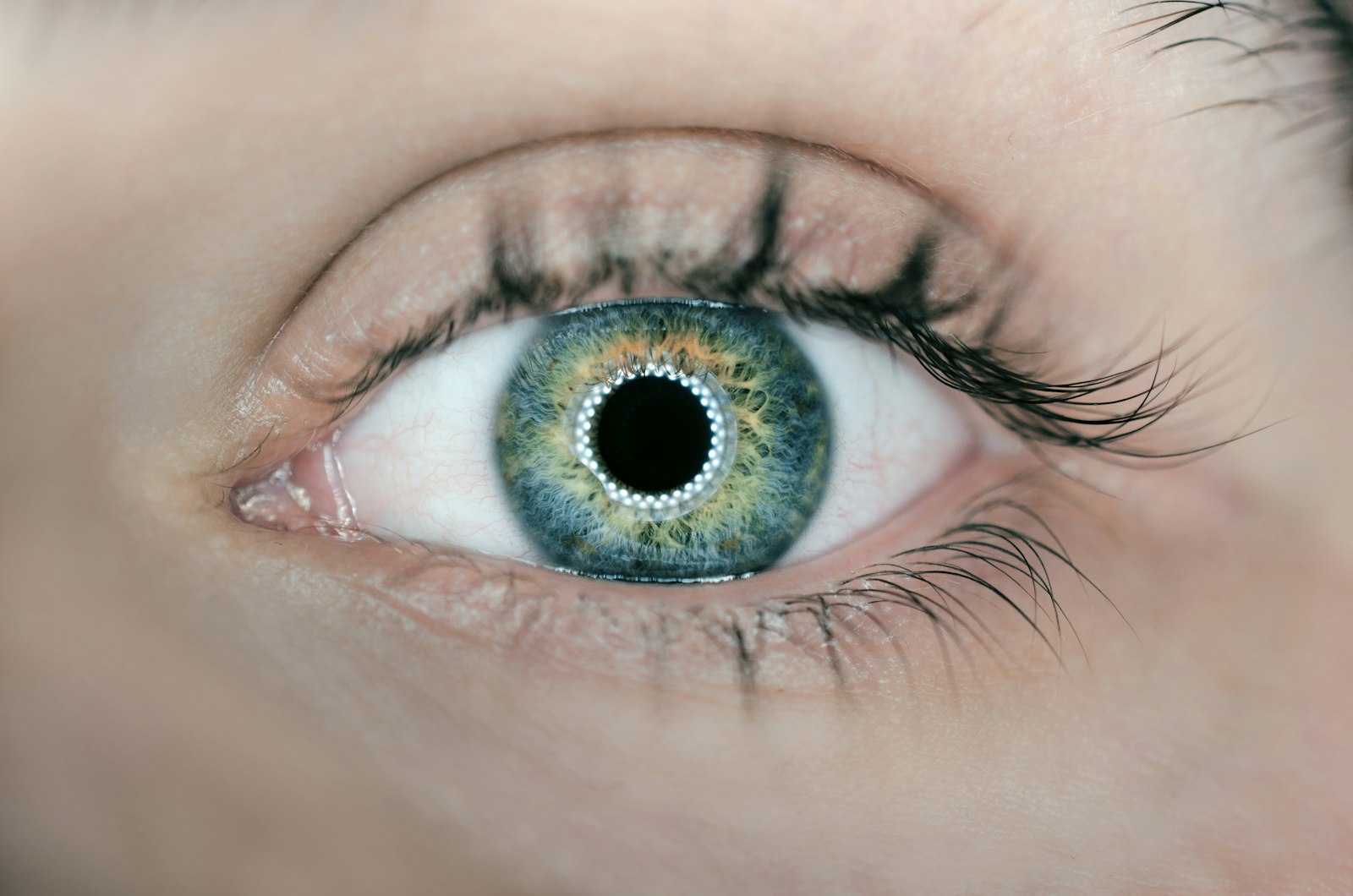
Our eyes are among the most sophisticated optical instruments in the natural world.
Despite their small size, they contain millions of cells working in precise coordination to deliver a continuous, detailed picture of the world around you. Understanding how your eyes work can deepen your appreciation for your vision and underscore why routine eye care matters so much.
Light Enters Through the Cornea
Every visual experience begins with light. When light strikes your eye, it first passes through the cornea, the clear, dome-shaped tissue that covers the front of the eye. The cornea does the heavy lifting in terms of focusing, responsible for roughly 65 to 75% of the eye's total refractive power. Because it is curved and transparent, it bends incoming light rays so they begin converging toward a single focal point. The health of your cornea is critical; even minor irregularities in its surface can significantly blur vision.
The Iris and Pupil Control Light Intake
After passing through the cornea, light travels through the aqueous humor, a clear fluid that fills the front chamber of the eye. It then reaches the iris, the colored ring of muscle most people think of as the defining feature of their eyes. The iris acts like a camera aperture, expanding and contracting to control the size of the pupil, the dark opening at its center. In dim light, the pupil widens to let in as much light as possible. In bright conditions, it constricts to prevent overexposure. This adjustment happens automatically and continuously throughout your day.
The Lens Fine-Tunes the Focus
Behind the pupil sits the crystalline lens, a flexible, transparent structure that refines the focusing work started by the cornea. Through a process called accommodation, tiny muscles called ciliary muscles change the shape of the lens depending on whether you are looking at something near or far.
For close objects, the lens becomes rounder and thicker. For distant objects, it flattens out. With age, the lens gradually loses its elasticity, which is why many people over 40 develop presbyopia, the need for reading glasses. Cataracts, another common age-related condition, occur when proteins in the lens begin to clump together and cloud its transparency.
The Retina Converts Light Into Signals
Once light passes through the lens, it travels across the vitreous humor, a gel-like substance that fills the large interior chamber of the eye, and lands on the retina. The retina is a thin layer of neural tissue lining the back of the eye, packed with two types of photoreceptor cells: rods and cones. Rods number roughly 120 million and are responsible for peripheral and low-light vision. Cones number around 6 million and cluster near the center of the retina in an area called the macula. Cones handle color and fine detail, which is why you point your gaze directly at whatever you most want to see clearly.
The Optic Nerve Delivers the Message
When photoreceptors detect light, they convert it into electrical impulses. These signals travel along the optic nerve, a bundle of more than one million nerve fibers, to the visual cortex at the back of the brain. The brain then interprets these signals as the images you perceive. This entire process, from light entering the eye to conscious perception, happens in milliseconds.
Don't Neglect Your Vision Health Care!
Your eyes perform millions of operations every waking hour. Keeping them healthy starts with a comprehensive eye exam. Conditions like glaucoma damage the optic nerve over time, often without noticeable symptoms until significant vision loss has already occurred, which is why regular eye exams are essential even when your vision seems fine.
Schedule your visit today to stay on top of your vision and overall eye health.
The content on this blog is not intended to be a substitute for professional medical advice, diagnosis, or treatment. Always seek the advice of qualified health providers with questions you may have regarding medical conditions.
Testimonials
What Our Clients Say

My annual eye exam is always an excellent experience with Dr. Danielle Dyke. The exam is always thorough, and Dr. Dyke takes the time to explain my eye health in a way I can understand. The Vision Source eye clinic is modern, clean, and the staff is very welcoming. I always feel comfortable and well-cared for at my appointment. I highly recommend Dr. Dyke and Vision Source!
Patricia G.
Dr. Schauer did an amazing job getting my eye infection cleared up. As I sat in my room waiting my turn, because I had a last minute appointment, I could hear her working with a family next door that had young kids.
Fred S.
Whenever I have had eye issues, they have made efforts to get me in asap. Which I really appreciate. I have had Dr. Aberle and Dr. Dyke and they are both excellent. Recently, I saw Dr. Aberle for a chronic eye problem in one eye & he fixed the problem. Honestly, it felt like a miracle. The office staff is also very pleasant to deal with.
Sheila S.
I've literally been a lifelong customer since 5th grade when it was Dr. Little! Dr. Schauer has taken over since Dr. Little retired. It's always a good, friendly experience with all of the staff there. I've never had a bad experience.
Bill S.
The front desk people are very nice and friendly got called in to see Wayne before my appointment time Vision Source has very friendly staff and the clinic is very clean will always be a patient to Vision Source.
Deborah C.
I was greeted by the front desk very efficiently. The person who did the first part of my history and did the testing like the little spritz in my eyes, etc, was very good. I really like my eye doctor, I feel that I get all my questions answered as well as she explains what she is seeing when she is examining my eyes.
Dolly A.
Need to Schedule an Appointment?
WE ARE Accepting New Patients
Your vision is precious—trust it to the experienced team at Vision Source Mandan, where we treat you like family
while providing the highest standard of eye care available in the Bismarck-Mandan area.
MAP
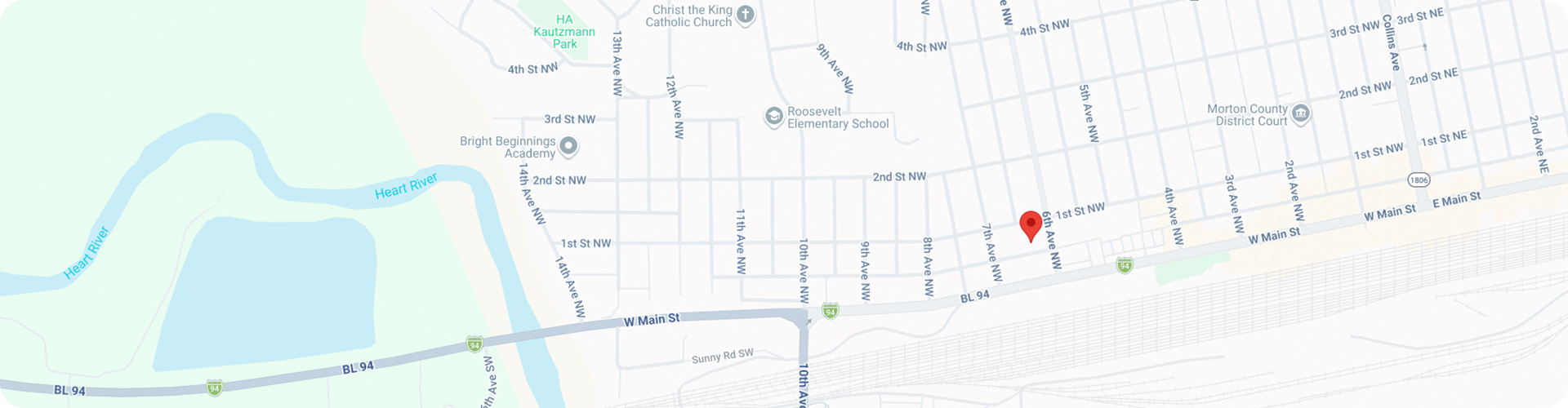

Contact Us
Office Hours
Monday 8:00am - 5:00pm
Tuesday 8:00am - 7:00pm
Wednesday 8:00am - 5:00pm
Thursday 8:00am - 5:00pm
Friday 8:00am - 1:00pm
Saturday Closed
Sunday Closed
* We are closed from 12:00 pm - 1:00pm on the 2nd Thursday of each month for a team meeting.
© 2026 Vision Source Mandan. All Rights Reserved. Accessibility Statement - Privacy Policy - Sitemap
Powered by: 