
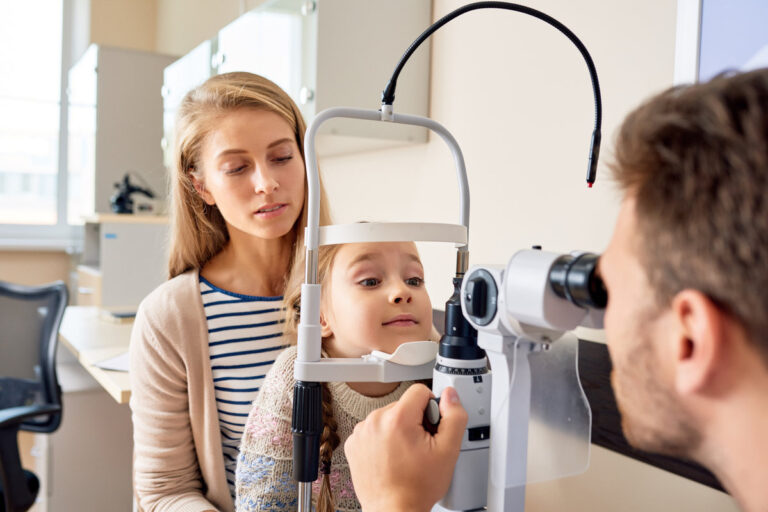
Does your child squint at the movie screen, scoot closer to the television during Saturday morning cartoons, or hold their tablet just inches from their nose while doing homework? If this sounds familiar, you’re not alone in wondering whether all those hours spent on devices are affecting your little one’s eyesight. But, there’s good news! You actually have more control over your child’s vision health than you might think.
At Vision Source Mandan, our experienced team has witnessed firsthand how environmental factors, including digital habits, contribute to the growing myopia epidemic affecting children across North Dakota and beyond. With over 75 years of comprehensive eye care experience, we provide families with evidence-based insights to protect their children’s developing vision.
The Connection Between Screen Time and Myopia Development
Research indicates that prolonged near-work activities, including screen use, may contribute to myopia progression in children, though the relationship involves multiple factors beyond digital exposure alone. When children focus intensely on close objects for extended periods, their eyes adapt by slightly elongating, which can lead to nearsightedness over time.
Studies from Asia, where myopia rates have increased dramatically alongside technology adoption, show correlations between intensive near-work and myopia development. However, scientists have identified that reduced outdoor time often accompanies increased screen use, creating a dual impact on children’s vision development. Natural light exposure and distance viewing during outdoor activities appear to provide protective benefits against myopia progression.
The blue light emitted by digital screens has received significant attention, though current research suggests it may contribute more to eye strain and sleep disruption than directly causing myopia. Digital eye strain symptoms, including dry eyes, fatigue, and headaches, can affect children’s comfort and learning ability without necessarily indicating permanent vision changes.
Environmental and Lifestyle Factors
Modern childhood lifestyles have shifted dramatically toward indoor, close-up activities that extend far beyond screen time. Reading, homework, art projects, and other near-work tasks contribute to the cumulative time children spend focusing on nearby objects rather than exercising their distance vision.
Reduced outdoor time is perhaps the most significant environmental change affecting children’s vision health. Research consistently shows that children who spend more time outdoors develop myopia at lower rates and experience slower progression when nearsightedness does occur. The protective mechanism appears related to natural light exposure and the opportunity for distance viewing that outdoor environments provide.
Genetic factors also play a notable role in the development of myopia. Children with myopic parents face higher risks regardless of their screen habits, suggesting that environmental factors may accelerate or trigger tendencies already present in their genetic makeup rather than creating myopia from nothing.
Recognizing Early Signs and Taking Action
Parents should watch for common vision problems that may point to the development of myopia in their children. The key signs to monitor include:
Squinting or closing one eye to see distant objects clearly
Holding books, tablets, or phones unusually close to their face
Frequent complaints about headaches, especially after schoolwork
Difficulty seeing the board at school or signs while riding in the car
Excessive eye rubbing or blinking
Early detection makes a considerable difference in managing the progression of myopia. Children often don’t realize their vision has changed because the shifts occur gradually, and they may assume everyone sees the world the way they do. Regular comprehensive eye exams help identify vision changes before they can impact learning or daily activities.
Professional Myopia Management Options
At Vision Source Mandan, we offer several evidence-based approaches to slow the progression of myopia in children.
CooperVision MiSight® 1-Day Contact Lenses
CooperVision MiSight® 1-Day contact lenses are our primary method for treating pediatric myopia and are specifically designed for children ages 8-12 when first fitted. However, we treat children outside this age range all the time, so if your child is not between ages 8 and 12, they may still get this treatment with off-label medicine. These innovative daily disposable lenses feature dual-focus technology that provides clear central vision while simultaneously creating peripheral defocus signals that may help slow eye elongation and myopia progression.
Atropine Eye Drops
Atropine eye drops, used in low concentrations, have also shown promise in clinical trials for slowing the progression of myopia with minimal side effects. This treatment approach requires careful monitoring and may be combined with other interventions for optimal results.
Environmental Modifications
Environmental modifications, while not eliminating genetic predispositions, can significantly impact progression rates. The 20-20-20 rule encourages children to look at objects 20 feet away for 20 seconds every 20 minutes during close-up work. Increasing outdoor time to at least two hours daily also provides natural protection against the development and progression of myopia.
Protect Your Child’s Vision at Vision Source Mandan
The relationship between screen time and myopia involves multiple factors that require professional evaluation and personalized management strategies. While digital devices contribute to the modern myopia epidemic, comprehensive approaches addressing outdoor time, visual habits, and early detection provide the best outcomes for long-term vision health.
Our team at Vision Source Mandan combines advanced diagnostic technology with decades of experience serving families throughout Mandan, Bismarck, and surrounding communities. Dr. Brittany Schauer, Dr. Wayne Aberle, and Dr. Danielle Dyke stay current with the latest myopia management techniques to provide your child with the most effective care options available. Take the first step in protecting your child’s vision by calling us at 701-969-4977 or completing our online contact form.
Testimonials
What Our Clients Say

My annual eye exam is always an excellent experience with Dr. Danielle Dyke. The exam is always thorough, and Dr. Dyke takes the time to explain my eye health in a way I can understand. The Vision Source eye clinic is modern, clean, and the staff is very welcoming. I always feel comfortable and well-cared for at my appointment. I highly recommend Dr. Dyke and Vision Source!
Patricia G.
Dr. Schauer did an amazing job getting my eye infection cleared up. As I sat in my room waiting my turn, because I had a last minute appointment, I could hear her working with a family next door that had young kids.
Fred S.
Whenever I have had eye issues, they have made efforts to get me in asap. Which I really appreciate. I have had Dr. Aberle and Dr. Dyke and they are both excellent. Recently, I saw Dr. Aberle for a chronic eye problem in one eye & he fixed the problem. Honestly, it felt like a miracle. The office staff is also very pleasant to deal with.
Sheila S.
I've literally been a lifelong customer since 5th grade when it was Dr. Little! Dr. Schauer has taken over since Dr. Little retired. It's always a good, friendly experience with all of the staff there. I've never had a bad experience.
Bill S.
The front desk people are very nice and friendly got called in to see Wayne before my appointment time Vision Source has very friendly staff and the clinic is very clean will always be a patient to Vision Source.
Deborah C.
I was greeted by the front desk very efficiently. The person who did the first part of my history and did the testing like the little spritz in my eyes, etc, was very good. I really like my eye doctor, I feel that I get all my questions answered as well as she explains what she is seeing when she is examining my eyes.
Dolly A.

Need to Schedule an Appointment?
WE ARE Accepting New Patients
Your vision is precious—trust it to the experienced team at Vision Source Mandan, where we treat you like family
while providing the highest standard of eye care available in the Bismarck-Mandan area.
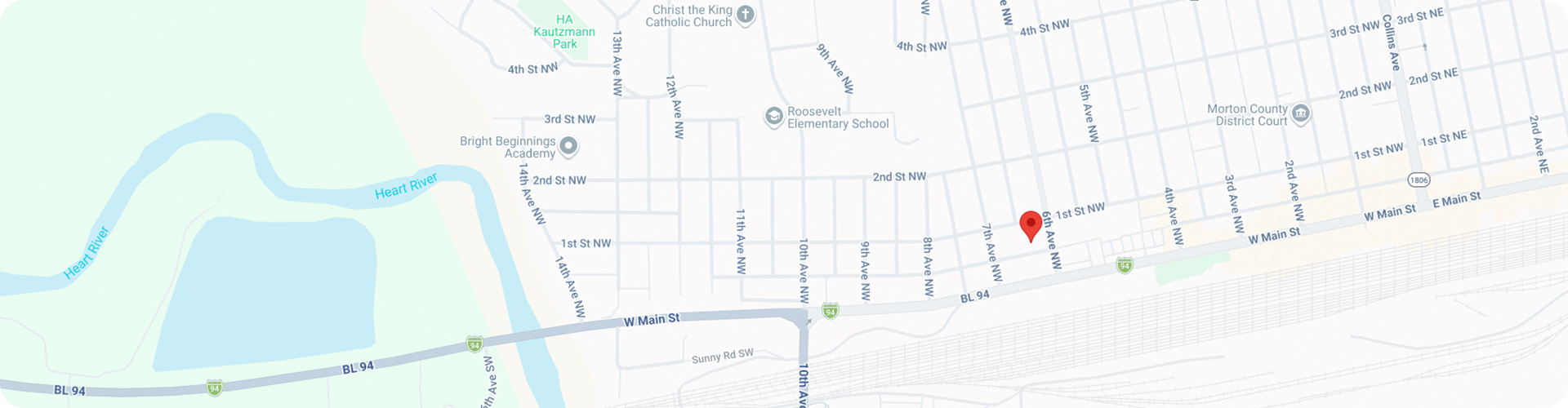
MAP

Contact Us
Office Hours
Monday 8:00am - 5:00pm
Tuesday 8:00am - 7:00pm
Wednesday 8:00am - 5:00pm
Thursday 8:00am - 5:00pm
Friday 8:00am - 1:00pm
Saturday Closed
Sunday Closed
* We are closed from 12:00 pm - 1:00pm on the 2nd Thursday of each month for a team meeting.
© 2026 Vision Source Mandan. All Rights Reserved. Accessibility Statement - Privacy Policy - Sitemap
Powered by: 