

When your child's glasses prescription keeps getting stronger, it may be a sign of progressing myopia, also known as nearsightedness. At Vision Source Mandan, we offer myopia management options for children in Mandan and near Bismarck, including MiSight contact lenses and Essilor Stellest eyeglass lenses. Both treatments are designed to slow myopia progression, but they work differently and offer unique benefits depending on your child's age, vision needs, and lifestyle.
How Do MiSight Contact Lenses Work?
MiSight 1 Day contact lenses are FDA-approved soft contact lenses designed to correct nearsightedness while slowing its progression in children. They use specialized optical technology to help reduce the rate at which myopia develops as the eyes grow.
MiSight lenses are approved for children ages 8 to 12 at the start of treatment who meet specific prescription requirements. Because they are daily disposable lenses, children wear a fresh pair each day and discard them after removal.
For active children who participate in sports or prefer not to wear glasses, MiSight may be a convenient option. However, proper contact lens handling, hygiene, and regular follow-up appointments are essential.
How Do Stellest Eyeglass Lenses Work?
Essilor Stellest lenses offer a different approach to myopia management through specialized eyeglasses. Unlike traditional prescription glasses that only correct blurry vision, Stellest lenses are designed to provide clear vision while helping slow myopia progression.
These FDA-authorized lenses use Highly Aspherical Lenslet Target (H.A.L.T.) technology, which incorporates specially arranged lenslets to influence how light focuses in the eye.
Stellest lenses are authorized for eligible children ages 6 to 12 at treatment initiation. They may be especially appealing for children who are not ready for contact lenses or prefer wearing glasses throughout the day.
MiSight vs. Stellest: Which Is Better for Your Child?
Both treatments can help manage childhood myopia, but the right choice depends on several factors. During a myopia management consultation our Mandan office near Bismarck, we consider:
• Age and prescription: Each treatment has specific eligibility requirements, including prescription limits.
• Daily activities: MiSight may be convenient for sports, while Stellest provides a glasses-based alternative.
• Comfort and responsibility: Contact lenses require proper handling, while eyeglasses may be easier for younger children.
• Treatment commitment: Both options require consistent wear and follow-up visits to monitor myopia progression.
Neither treatment cures nearsightedness or guarantees that progression will stop completely. Our goal is to select an appropriate option that supports your child's long-term vision.
Why Is Early Myopia Management Important?
Myopia often progresses during childhood as the eyes continue to grow. Higher levels of nearsightedness are associated with an increased risk of certain eye conditions later in life, including retinal problems.
At Vision Source Mandan, we evaluate prescription changes, eye growth, and overall eye health to develop personalized myopia management plans. Regular monitoring allows us to assess your child's progress and make adjustments when necessary.
Schedule a Myopia Management Consultation Near Bismarck
If your child's nearsightedness is progressing or you're considering MiSight or Stellest lenses, schedule a myopia management consultation with Vision Source Mandan to explore personalized treatment options. Visit our office in Mandan, ND, conveniently located near Bismarck, or call (701) 800-7501 to book an appointment today.
Testimonials
What Our Clients Say

My annual eye exam is always an excellent experience with Dr. Danielle Dyke. The exam is always thorough, and Dr. Dyke takes the time to explain my eye health in a way I can understand. The Vision Source eye clinic is modern, clean, and the staff is very welcoming. I always feel comfortable and well-cared for at my appointment. I highly recommend Dr. Dyke and Vision Source!
Patricia G.
Dr. Schauer did an amazing job getting my eye infection cleared up. As I sat in my room waiting my turn, because I had a last minute appointment, I could hear her working with a family next door that had young kids.
Fred S.
Whenever I have had eye issues, they have made efforts to get me in asap. Which I really appreciate. I have had Dr. Aberle and Dr. Dyke and they are both excellent. Recently, I saw Dr. Aberle for a chronic eye problem in one eye & he fixed the problem. Honestly, it felt like a miracle. The office staff is also very pleasant to deal with.
Sheila S.
I've literally been a lifelong customer since 5th grade when it was Dr. Little! Dr. Schauer has taken over since Dr. Little retired. It's always a good, friendly experience with all of the staff there. I've never had a bad experience.
Bill S.
The front desk people are very nice and friendly got called in to see Wayne before my appointment time Vision Source has very friendly staff and the clinic is very clean will always be a patient to Vision Source.
Deborah C.
I was greeted by the front desk very efficiently. The person who did the first part of my history and did the testing like the little spritz in my eyes, etc, was very good. I really like my eye doctor, I feel that I get all my questions answered as well as she explains what she is seeing when she is examining my eyes.
Dolly A.

Need to Schedule an Appointment?
WE ARE Accepting New Patients
Your vision is precious—trust it to the experienced team at Vision Source Mandan, where we treat you like family
while providing the highest standard of eye care available in the Bismarck-Mandan area.
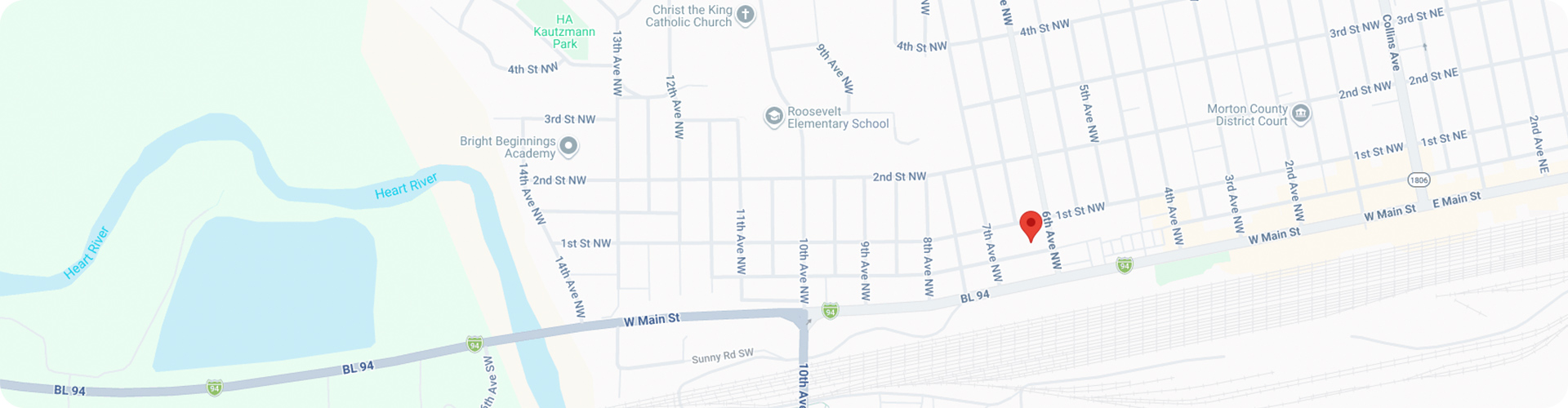
MAP

Contact Us
Office Hours
Monday 8:00am - 5:00pm
Tuesday 8:00am - 7:00pm
Wednesday 8:00am - 5:00pm
Thursday 8:00am - 5:00pm
Friday 8:00am - 1:00pm
Saturday Closed
Sunday Closed
* We are closed from 12:00 pm - 1:00pm on the 2nd Thursday of each month for a team meeting.
© 2026 Vision Source Mandan. All Rights Reserved. Accessibility Statement - Privacy Policy - Sitemap
Powered by: 