
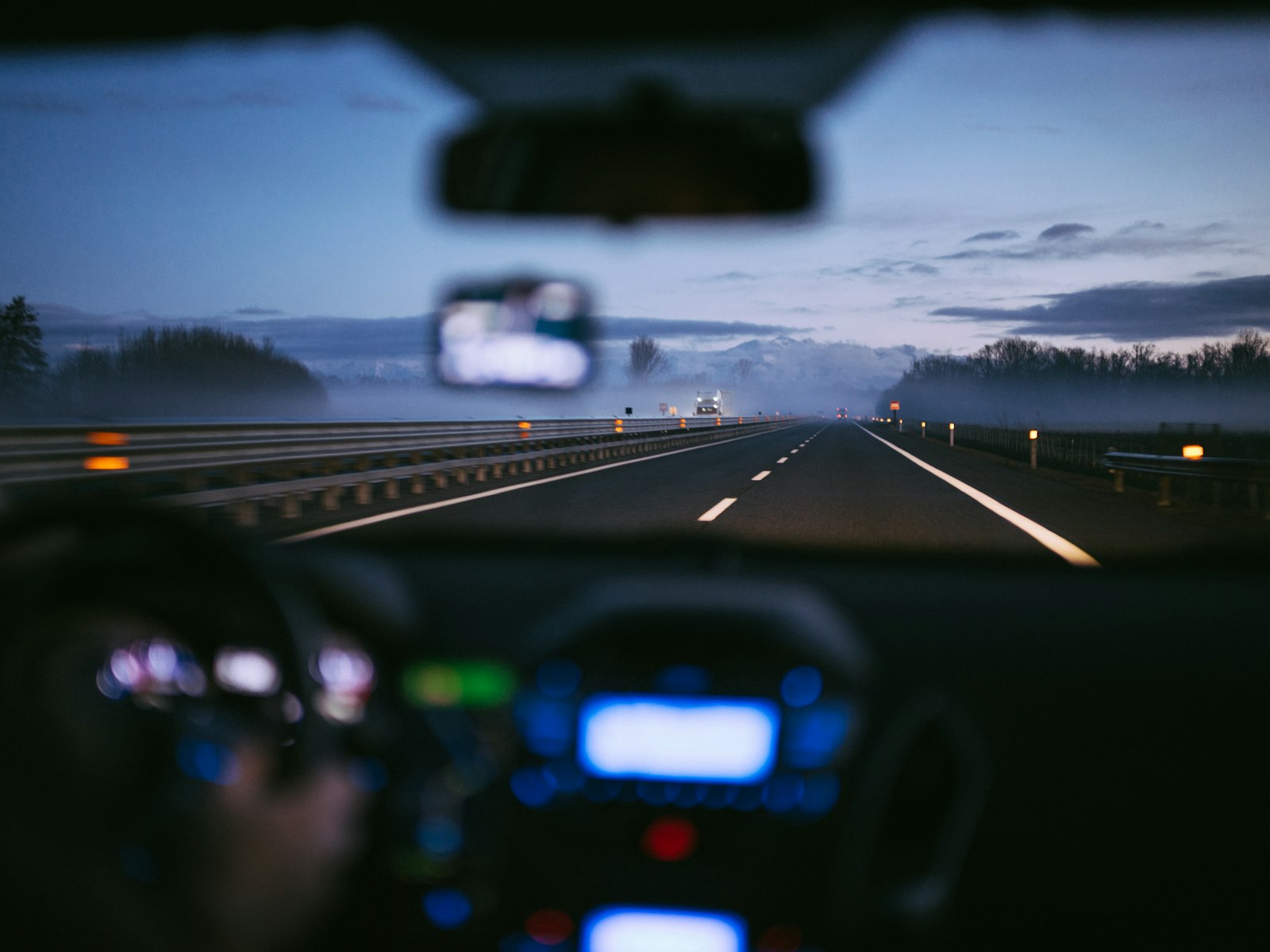
Driving after dark presents unique challenges that many people underestimate.
While nighttime traffic is typically lighter, the reduced visibility significantly increases accident risk. Understanding how your eyes work in low-light conditions can help you stay safer on the road.
The Science Behind Night Vision
Your eyes contain two types of photoreceptor cells: cones and rods. Cones handle daytime vision and color perception, while rods manage low-light situations. When darkness falls, your eyes need several minutes to fully adjust as the rods take over. This adaptation period means you might struggle to see clearly when first leaving a brightly lit area.
The pupils also dilate in darkness to allow more light into the eye. However, this natural response has limitations. As we age, our pupils become less responsive and don't dilate as widely, reducing the amount of light reaching the retina. This explains why many older drivers feel less confident behind the wheel after sunset.
Common Nighttime Vision Problems
Several vision issues become more pronounced when driving at night. Glare from oncoming headlights can temporarily blind you, especially if you have cataracts or astigmatism. This scattered light creates halos and starbursts around light sources, making it difficult to judge distances and spot pedestrians.
Reduced contrast sensitivity also affects nighttime driving. The ability to distinguish objects from their background decreases in dim conditions, making it harder to see road edges, lane markings, and other vehicles. People with uncorrected refractive errors like nearsightedness often notice this problem worsens dramatically after dark.
Depth perception naturally declines without adequate lighting. Your brain relies on visual cues to judge how far away objects are, and these cues diminish at night. This can lead to misjudging the speed of approaching vehicles or the distance to the car ahead.
Protecting Your Vision for Safer Night Driving
Regular comprehensive eye exams are essential for safe nighttime driving. Many vision problems develop gradually, and you might not realize your eyesight has deteriorated until you're struggling on dark roads. An optometrist can detect issues early and provide corrective solutions.
- Keep your windshield and headlights clean, inside and out. Dirty glass amplifies glare and scatters light, further compromising your vision. Replace worn wiper blades promptly to maintain clear visibility during rain.
- If you wear glasses, consider anti-reflective coating. This treatment reduces glare from headlights and street lamps while improving contrast. Some people also benefit from prescription adjustments specifically optimized for nighttime use.
- Avoid looking directly at oncoming headlights. Instead, focus on the right edge of your lane. If glare becomes overwhelming, slow down and pull over safely until your vision recovers.
- Finally, be honest about your limitations. If night driving has become stressful or you've had close calls, schedule an eye exam. Your optometrist can evaluate whether vision correction might help or if limiting nighttime driving is the safest choice.
Always Prioritize Safety on the Road
Your eyes are your most important tool for safe driving. Taking care of them through regular checkups and following these precautions can help ensure you reach your destination safely, regardless of the hour.
Regular eye exams help you protect your eyesight!
The content on this blog is not intended to be a substitute for professional medical advice, diagnosis, or treatment. Always seek the advice of qualified health providers with questions you may have regarding medical conditions.
Testimonials
What Our Clients Say

My annual eye exam is always an excellent experience with Dr. Danielle Dyke. The exam is always thorough, and Dr. Dyke takes the time to explain my eye health in a way I can understand. The Vision Source eye clinic is modern, clean, and the staff is very welcoming. I always feel comfortable and well-cared for at my appointment. I highly recommend Dr. Dyke and Vision Source!
Patricia G.
Dr. Schauer did an amazing job getting my eye infection cleared up. As I sat in my room waiting my turn, because I had a last minute appointment, I could hear her working with a family next door that had young kids.
Fred S.
Whenever I have had eye issues, they have made efforts to get me in asap. Which I really appreciate. I have had Dr. Aberle and Dr. Dyke and they are both excellent. Recently, I saw Dr. Aberle for a chronic eye problem in one eye & he fixed the problem. Honestly, it felt like a miracle. The office staff is also very pleasant to deal with.
Sheila S.
I've literally been a lifelong customer since 5th grade when it was Dr. Little! Dr. Schauer has taken over since Dr. Little retired. It's always a good, friendly experience with all of the staff there. I've never had a bad experience.
Bill S.
The front desk people are very nice and friendly got called in to see Wayne before my appointment time Vision Source has very friendly staff and the clinic is very clean will always be a patient to Vision Source.
Deborah C.
I was greeted by the front desk very efficiently. The person who did the first part of my history and did the testing like the little spritz in my eyes, etc, was very good. I really like my eye doctor, I feel that I get all my questions answered as well as she explains what she is seeing when she is examining my eyes.
Dolly A.

Need to Schedule an Appointment?
WE ARE Accepting New Patients
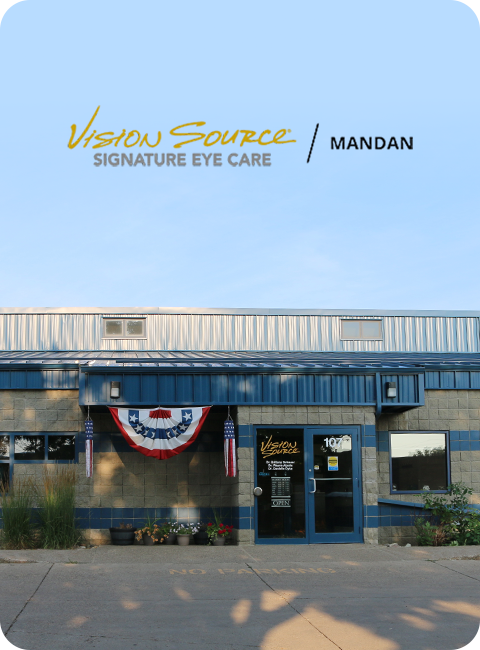
Your vision is precious—trust it to the experienced team at Vision Source Mandan, where we treat you like family
while providing the highest standard of eye care available in the Bismarck-Mandan area.
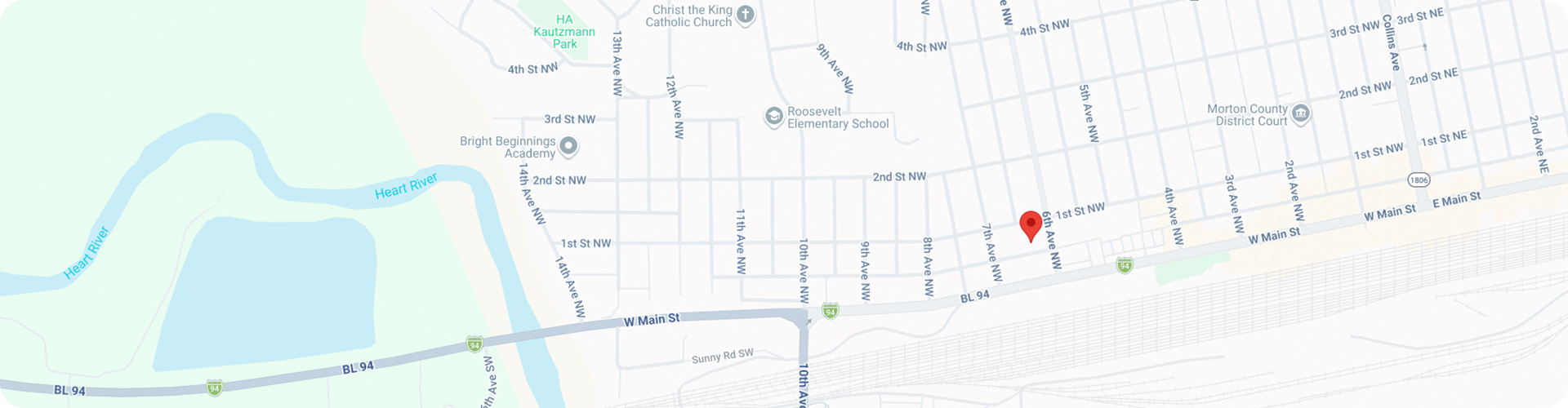
MAP

Contact Us
Office Hours
Monday 8:00am - 5:00pm
Tuesday 8:00am - 7:00pm
Wednesday 8:00am - 5:00pm
Thursday 8:00am - 5:00pm
Friday 8:00am - 1:00pm
Saturday Closed
Sunday Closed
* We are closed from 12:00 pm - 1:00pm on the 2nd Thursday of each month for a team meeting.
© 2026 Vision Source Mandan. All Rights Reserved. Accessibility Statement - Privacy Policy - Sitemap
Powered by: 