

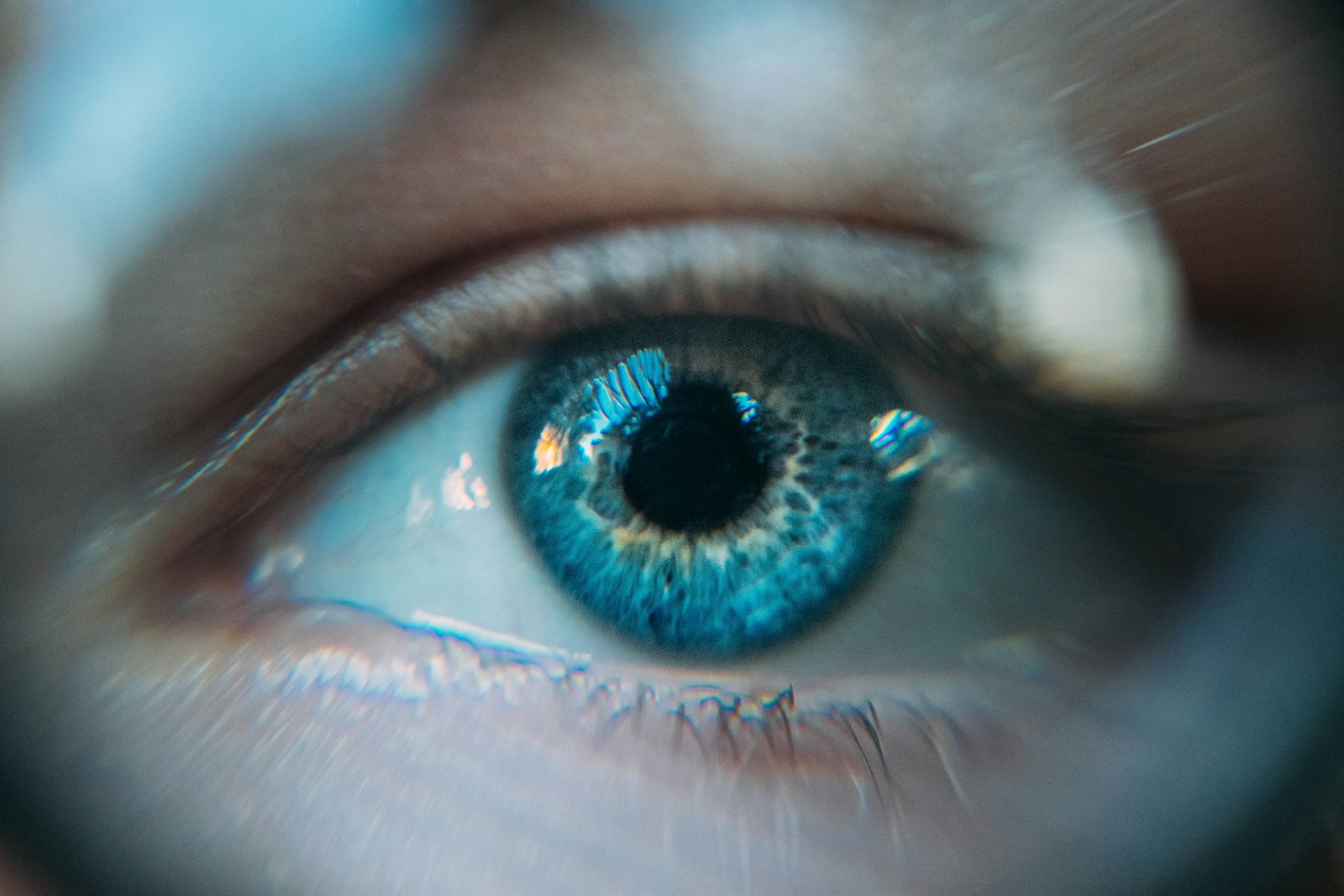
When it comes to vision and eye health, biology makes a difference.
Research consistently shows that certain eye conditions affect women and men at different rates, with different levels of severity, and sometimes for different reasons. Understanding these differences can help you take a more proactive approach to protecting your sight.
Dry Eye
Dry eye is one of the clearest examples of a sex-based difference in eye health. Women are significantly more likely than men to develop this condition, largely due to hormonal fluctuations. Estrogen and androgen levels influence the function of the meibomian glands, which produce the oily layer of the tear film that prevents tears from evaporating too quickly. Pregnancy, oral contraceptive use, and menopause can all disrupt this balance, making dry eye a persistent concern for many women throughout their lives.
Men are not immune, of course, but when dry eye occurs in men, it is often connected to different triggers such as prolonged screen exposure or certain medications.
Glaucoma
Glaucoma is a leading cause of irreversible blindness worldwide, and while both sexes are affected, the type of glaucoma differs. Men have a higher risk of developing open-angle glaucoma, the most common form. Women, on the other hand, are at greater risk of angle-closure glaucoma, a less common but often more acute and rapidly progressing type. Anatomical differences in eye structure, including a shallower anterior chamber depth in women, are thought to contribute to this disparity.
Age-related Macular Degeneration
Age-related macular degeneration (AMD) affects the central area of the retina and is the leading cause of vision loss in people over 50. Women are diagnosed with AMD at higher rates than men, which may partly reflect the fact that women live longer on average. However, hormonal factors may also play a role, since some research suggests that post-menopausal women face a heightened risk as estrogen levels decline.
Color Vision Deficiency
Color blindness presents one of the most well-known biological gaps between the sexes. The most common forms are linked to the X chromosome, and because men have only one X chromosome, a single gene mutation is enough to cause the condition. Women, with two X chromosomes, are far less likely to be affected but are more likely to be carriers. Roughly 8 percent of men have some form of color vision deficiency, compared to less than 1 percent of women.
What This Means for Your Eye Care
Knowing your risk profile is a powerful tool. Women may want to discuss hormonal changes with their eye doctor, particularly around menopause or when starting or stopping hormonal medications. Men should stay alert to changes in peripheral vision, which can be an early sign of open-angle glaucoma.
Most importantly, regular comprehensive eye exams remain the single best way to catch problems early, regardless of sex. Many serious eye conditions have no noticeable symptoms in the early stages, and early detection almost always leads to better outcomes. Talk to your optometrist about how your personal history and biology should shape your eye care routine.
Bring us your eye health concerns!
The content on this blog is not intended to be a substitute for professional medical advice, diagnosis, or treatment. Always seek the advice of qualified health providers with questions you may have regarding medical conditions.
Testimonials
What Our Clients Say

My annual eye exam is always an excellent experience with Dr. Danielle Dyke. The exam is always thorough, and Dr. Dyke takes the time to explain my eye health in a way I can understand. The Vision Source eye clinic is modern, clean, and the staff is very welcoming. I always feel comfortable and well-cared for at my appointment. I highly recommend Dr. Dyke and Vision Source!
Patricia G.
Dr. Schauer did an amazing job getting my eye infection cleared up. As I sat in my room waiting my turn, because I had a last minute appointment, I could hear her working with a family next door that had young kids.
Fred S.
Whenever I have had eye issues, they have made efforts to get me in asap. Which I really appreciate. I have had Dr. Aberle and Dr. Dyke and they are both excellent. Recently, I saw Dr. Aberle for a chronic eye problem in one eye & he fixed the problem. Honestly, it felt like a miracle. The office staff is also very pleasant to deal with.
Sheila S.
I've literally been a lifelong customer since 5th grade when it was Dr. Little! Dr. Schauer has taken over since Dr. Little retired. It's always a good, friendly experience with all of the staff there. I've never had a bad experience.
Bill S.
The front desk people are very nice and friendly got called in to see Wayne before my appointment time Vision Source has very friendly staff and the clinic is very clean will always be a patient to Vision Source.
Deborah C.
I was greeted by the front desk very efficiently. The person who did the first part of my history and did the testing like the little spritz in my eyes, etc, was very good. I really like my eye doctor, I feel that I get all my questions answered as well as she explains what she is seeing when she is examining my eyes.
Dolly A.

Need to Schedule an Appointment?
WE ARE Accepting New Patients
Your vision is precious—trust it to the experienced team at Vision Source Mandan, where we treat you like family
while providing the highest standard of eye care available in the Bismarck-Mandan area.
MAP



Contact Us
Office Hours
Monday 8:00am - 5:00pm
Tuesday 8:00am - 7:00pm
Wednesday 8:00am - 5:00pm
Thursday 8:00am - 5:00pm
Friday 8:00am - 1:00pm
Saturday Closed
Sunday Closed
* We are closed from 12:00 pm - 1:00pm on the 2nd Thursday of each month for a team meeting.
© 2026 Vision Source Mandan. All Rights Reserved. Accessibility Statement - Privacy Policy - Sitemap
Powered by: 