
If your child passed the vision screening at school, it’s easy to assume their eyes are fine. That assumption, while understandable, can leave real problems undetected. School screenings are basic tools designed to flag obvious concerns, but they don’t evaluate the full picture of a child’s eye health. Conditions like early-stage myopia, amblyopia, and eye coordination issues are routinely missed, and children often don’t report blurry vision because they have nothing to compare it to.
At Vision Source Mandan, children’s eye exams are a priority for Dr. Brittany Schauer, Dr. Wayne Aberle, and Dr. Danielle Dyke. The team sees kids every year not because something seems wrong, but because annual exams catch what screenings can’t and give families the information they need to protect their child’s vision during the years it matters most.
What a School Screening Actually Tests
A school screening typically checks whether a child can read a chart at a set distance with each eye. It won’t catch issues with how the eyes work together, problems with depth perception, early signs of eye disease, or refractive errors that fall below the threshold used to flag a referral. According to Prevent Blindness, 1 in 4 school-aged children has an undetected vision disorder that can interfere with learning and development.
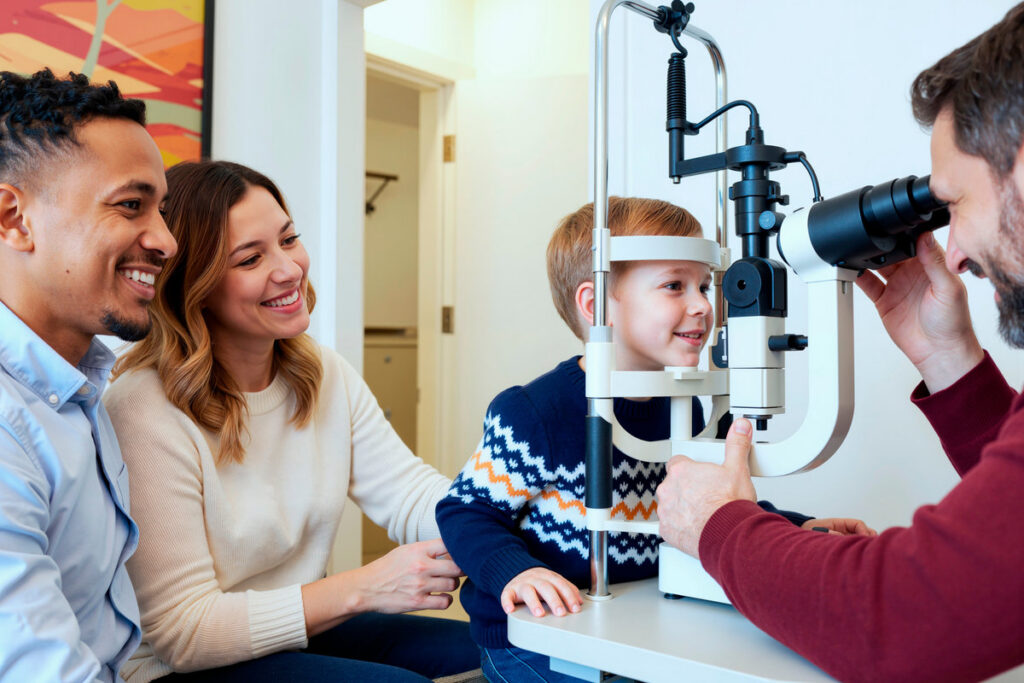
A comprehensive eye exam conducted by an optometrist goes well beyond the chart. It evaluates the health of the eye itself, how both eyes work together, focusing ability, and whether the visual system is developing on track. Passing a school screening is not the same as having healthy eyes.
Testimonials
What Our Clients Say

My annual eye exam is always an excellent experience with Dr. Danielle Dyke. The exam is always thorough, and Dr. Dyke takes the time to explain my eye health in a way I can understand. The Vision Source eye clinic is modern, clean, and the staff is very welcoming. I always feel comfortable and well-cared for at my appointment. I highly recommend Dr. Dyke and Vision Source!
Patricia G.
Dr. Schauer did an amazing job getting my eye infection cleared up. As I sat in my room waiting my turn, because I had a last minute appointment, I could hear her working with a family next door that had young kids.
Fred S.
Whenever I have had eye issues, they have made efforts to get me in asap. Which I really appreciate. I have had Dr. Aberle and Dr. Dyke and they are both excellent. Recently, I saw Dr. Aberle for a chronic eye problem in one eye & he fixed the problem. Honestly, it felt like a miracle. The office staff is also very pleasant to deal with.
Sheila S.
I've literally been a lifelong customer since 5th grade when it was Dr. Little! Dr. Schauer has taken over since Dr. Little retired. It's always a good, friendly experience with all of the staff there. I've never had a bad experience.
Bill S.
The front desk people are very nice and friendly got called in to see Wayne before my appointment time Vision Source has very friendly staff and the clinic is very clean will always be a patient to Vision Source.
Deborah C.
I was greeted by the front desk very efficiently. The person who did the first part of my history and did the testing like the little spritz in my eyes, etc, was very good. I really like my eye doctor, I feel that I get all my questions answered as well as she explains what she is seeing when she is examining my eyes.
Dolly A.

Need to Schedule an Appointment?
WE ARE Accepting New Patients
Your vision is precious—trust it to the experienced team at Vision Source Mandan, where we treat you like family
while providing the highest standard of eye care available in the Bismarck-Mandan area.
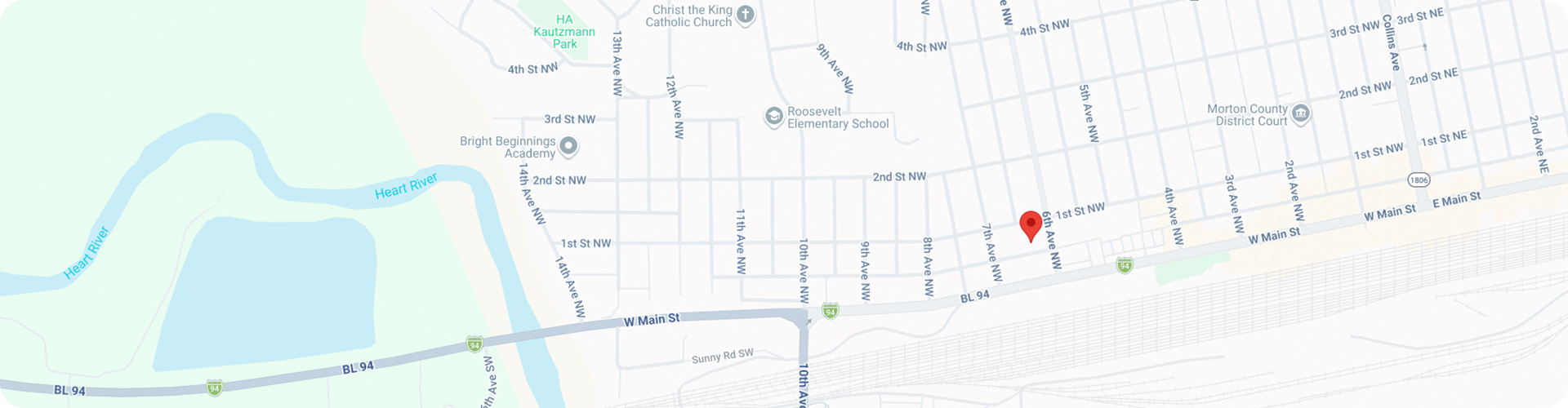
MAP

Contact Us
Office Hours
Monday 8:00am - 5:00pm
Tuesday 8:00am - 7:00pm
Wednesday 8:00am - 5:00pm
Thursday 8:00am - 5:00pm
Friday 8:00am - 1:00pm
Saturday Closed
Sunday Closed
* We are closed from 12:00 pm - 1:00pm on the 2nd Thursday of each month for a team meeting.
© 2026 Vision Source Mandan. All Rights Reserved. Accessibility Statement - Privacy Policy - Sitemap
Powered by: 