

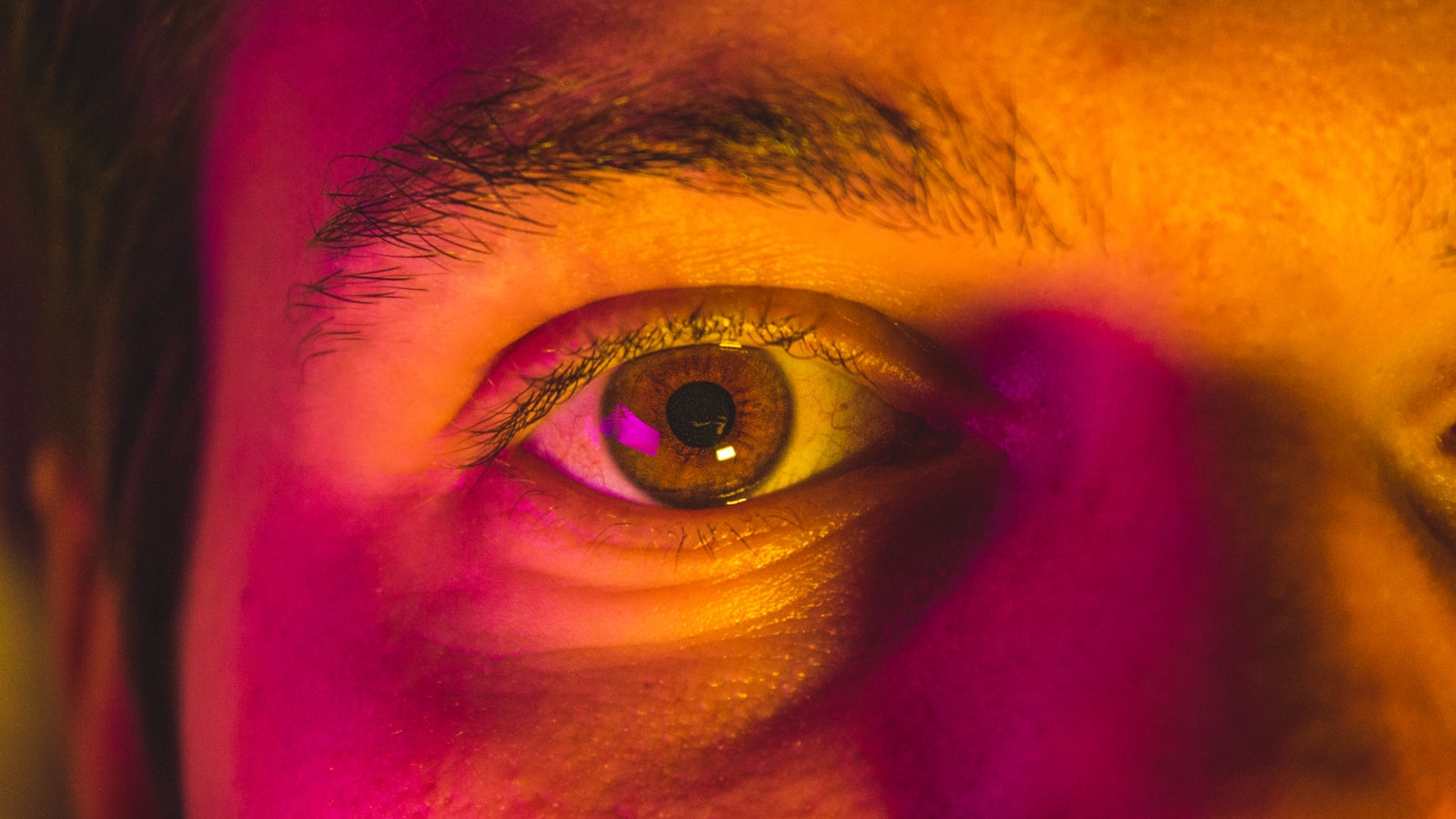
Anyone who doesn’t have color blindness might expect it to work like black-and-white photography.
It’s actually more complex than that. There are different types of color blindness, and whether or not you have it is almost always dictated by your genes.
The Genetics Of Color Blindness
Color blindness is largely determined by a recessive gene on the X chromosome. This means that women need two copies of the gene to actually be colorblind but they can be carriers with no symptoms if they only have one copy, whereas men will be colorblind if their single X chromosome contains the gene. As a result, around eight percent of men are colorblind, compared to less than one percent of women.
How Color Vision Works
There are two types of light-sensitive cells in our retinas: rods and cones. Rods enable us to see in low-light conditions, while cones enable us to see colors. Our color vision is trichromatic, meaning we have cones that are specifically sensitive to long (red), medium (green), and short (blue) wavelengths of light. Color blindness is what happens when one or more of these types of cones don’t work the way they should.
Types Of Color Blindness
The most common type of color blindness is red/green. Because red and green are opposite colors, you’ll be red/green colorblind whether it’s the green cones that aren’t working (deuteranomaly) or the red cones (protanomaly). The result is about the same either way: colors with red or green in them appear duller or yellowish brown.
Much more rare is blue/yellow color blindness (tritanopia), which happens when the blue cones are the ones that don’t work properly. This results in a visual landscape of pinks, teals, and browns.
Even rarer than red/green and blue/yellow color blindness is monochromacy, or complete color blindness. People with monochromatic vision can only see in shades of gray. They tend to be extremely sensitive to light. Because cones are what give us sharp detail in our vision, monochromacy can also mean that vision will be fuzzy overall.
Fun fact: many animals, including dogs, have red/green color blindness. They mostly see in yellows, blues, and grays. The idea of enraging a bull using a red cape is erroneous, because bulls can’t see the color red!
Glasses To Correct Color Blindness?
Within red/green and blue/yellow color blindness, there are still important distinctions in how it happens. You could be dichromatic, meaning your eyes completely lack a type of cone, or you could be an anomalous trichromat, meaning your cones simply overlap too much in what stimulates them.
Anomalous trichromacy is more common, and if the overlap isn’t too severe, the color blindness can be counteracted with special glasses designed to block out the wavelengths of light that trigger both types of cones.
Check out this video to see how these glasses work:
Need Help Navigating Your Color Blindness?
If you’ve been living with a type of color blindness, there are plenty of resources available to you to make life in a trichromatic society easier. Schedule an appointment with your local Vision Source® member optometrist so that they can get you what you need!
Thank you for trusting Vision Source with your vision health!
Find a Vision Source® practice near you using our search tool.
Top image used under CC0 Public Domain license. Image cropped and modified from original.
The content on this blog is not intended to be a substitute for professional medical advice, diagnosis, or treatment. Always seek the advice of qualified health providers with questions you may have regarding medical conditions.
Testimonials
What Our Clients Say

My annual eye exam is always an excellent experience with Dr. Danielle Dyke. The exam is always thorough, and Dr. Dyke takes the time to explain my eye health in a way I can understand. The Vision Source eye clinic is modern, clean, and the staff is very welcoming. I always feel comfortable and well-cared for at my appointment. I highly recommend Dr. Dyke and Vision Source!
Patricia G.
Dr. Schauer did an amazing job getting my eye infection cleared up. As I sat in my room waiting my turn, because I had a last minute appointment, I could hear her working with a family next door that had young kids.
Fred S.
Whenever I have had eye issues, they have made efforts to get me in asap. Which I really appreciate. I have had Dr. Aberle and Dr. Dyke and they are both excellent. Recently, I saw Dr. Aberle for a chronic eye problem in one eye & he fixed the problem. Honestly, it felt like a miracle. The office staff is also very pleasant to deal with.
Sheila S.
I've literally been a lifelong customer since 5th grade when it was Dr. Little! Dr. Schauer has taken over since Dr. Little retired. It's always a good, friendly experience with all of the staff there. I've never had a bad experience.
Bill S.
The front desk people are very nice and friendly got called in to see Wayne before my appointment time Vision Source has very friendly staff and the clinic is very clean will always be a patient to Vision Source.
Deborah C.
I was greeted by the front desk very efficiently. The person who did the first part of my history and did the testing like the little spritz in my eyes, etc, was very good. I really like my eye doctor, I feel that I get all my questions answered as well as she explains what she is seeing when she is examining my eyes.
Dolly A.

Need to Schedule an Appointment?
WE ARE Accepting New Patients
Your vision is precious—trust it to the experienced team at Vision Source Mandan, where we treat you like family
while providing the highest standard of eye care available in the Bismarck-Mandan area.
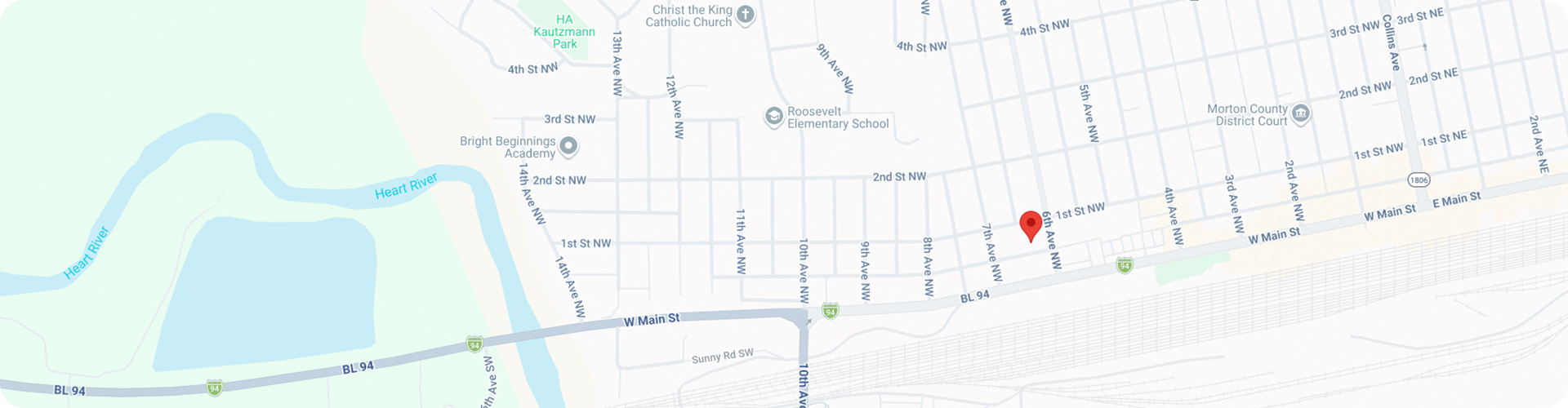
MAP


Contact Us
Office Hours
Monday 8:00am - 5:00pm
Tuesday 8:00am - 7:00pm
Wednesday 8:00am - 5:00pm
Thursday 8:00am - 5:00pm
Friday 8:00am - 1:00pm
Saturday Closed
Sunday Closed
* We are closed from 12:00 pm - 1:00pm on the 2nd Thursday of each month for a team meeting.
© 2026 Vision Source Mandan. All Rights Reserved. Accessibility Statement - Privacy Policy - Sitemap
Powered by: 